
Ideas to Implementation (I2I) Pitch Competition
We invite you to join us for Ideas to Implementation (I2I), a curated pitch competition spotlighting high-impact ideas that are advancing toward early-stage companies and attracting meaningful investment. These innovations integrate cutting-edge approaches to women’s health with a strong focus on breast cancer prevention and incidence reduction. Seating is limited and advance registration is required.
Thursday, February 19, 2026 | 9:00AM – 12:00PM
Hotel Nikko’s Feinstein's | San Francisco, CA
Judges:
Venture Capital Experts

Naseem Sayani, MBA
Naseem is a seasoned VC investor focused on backing and elevating ambitious female founders. Across her VC and angel portfolios, she has made 40+ investments in female-founded teams from Pre-seed to Series A, spanning health tech, fintech, and sustainability. She holds several venture partner roles across the ecosystem at funds including Zero Limits Capital and The Sparrow Fund. Naseem was also a founding partner of Emmeline Ventures, a seed-stage fund based in Los Angeles.
Naseem currently leads the Innovator’s Circle at WHAM (Women’s Health Access Matters), where she focuses on organizing the early-stage startup and fund ecosystem to ensure there are strong companies ready for later-stage investment. She is also a member of the Milken Institute's Women's Health Network.

Alice Zheng, MD, MBA, MPH
Alice Zheng has been a women’s health enthusiast throughout her career spanning global health, clinical medicine, and the private sector. She is currently a Partner at Foreground Capital, a venture capital firm investing in early-stage women’s health start-ups. Previously, she was a Principal at Foreground’s precursor funds at RH Capital, where she and the team built one of the largest dedicated venture capital portfolios in women’s health. She serves as a board director for Seven Starling and Millie and as a board observer for AOA and Cofertility.

Celina Johnson, MBA
Celina Johnson is a seasoned investor and startup executive with over 20 years of experience She is currently the Co-founder and Managing Partner of the Goddess Fun+d, dedicated to reclaiming investing as a joyful and intentional act while supporting women entrepreneurs who are creating positive global impact.
Ms. Johnson began her career in investing at KKR. This foundational experience in global private equity paved the way for her 15+ years as a startup executive, where she gained deep operational knowledge in scaling companies. She combines this background in rigorous investment analysis and operational excellence with a passion for soulful connection and doing business in a radically new way.
Industry Experts
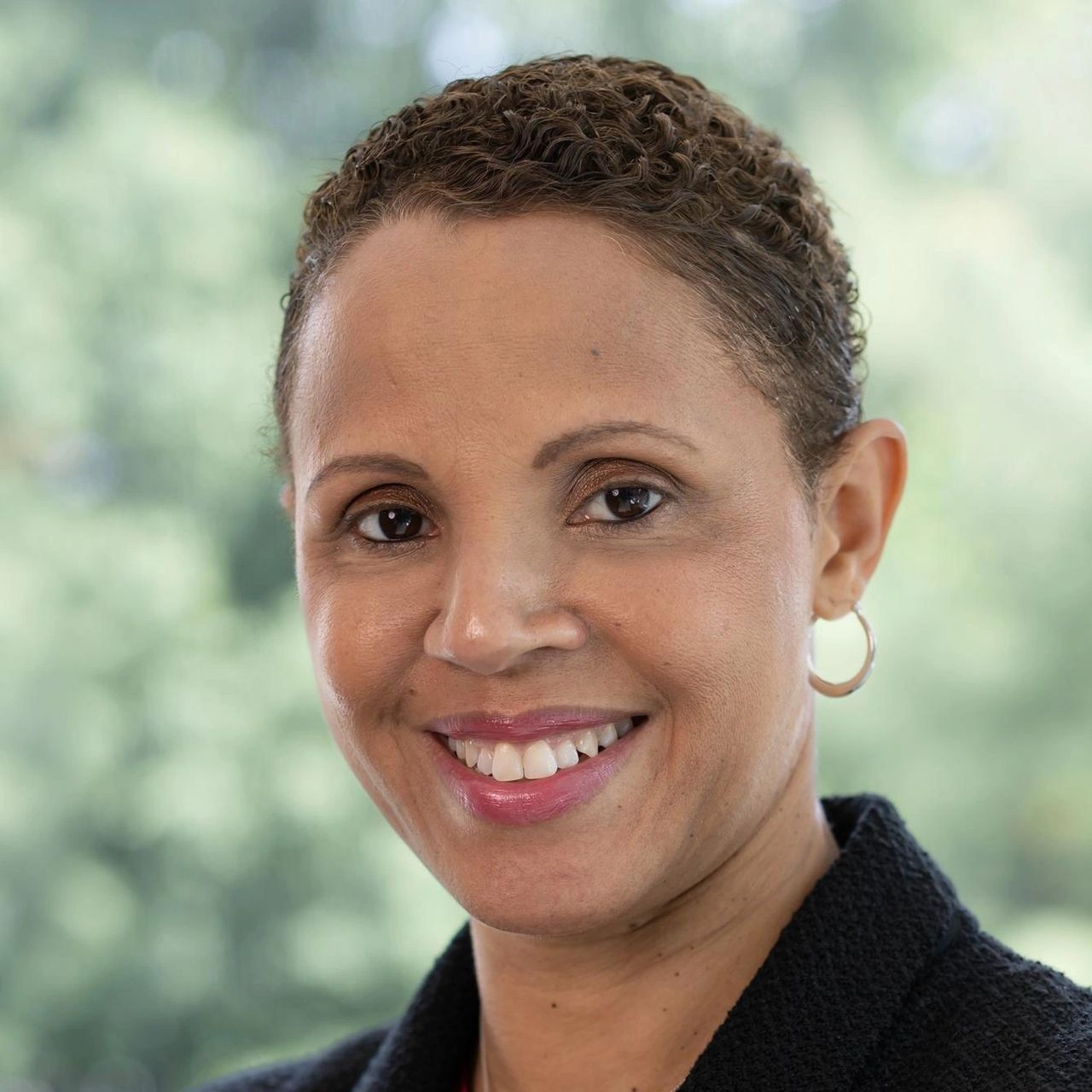
Beth Garner, MD, MPH
Elizabeth (Beth) Garner was Chief Scientific Officer of Ferring Pharmaceuticals US, a mid-size global company focused on reproductive and maternal health, microbiome and gastrointestinal therapeutics, and uro-oncology. She is also the Immediate Past President of the American Medical Women’s Association (AMWA).

Scott St. Germain, MBA
Scott St. Germain serves as Vice President and U.S. General Manager at Genentech, a leading biotechnology company, located in South San Francisco. In this capacity, he oversees all business teams, activities, and investments to ensure that patient care is optimized in specific therapeutic areas. Scott also is responsible for guiding the commercialization of innovative pipeline molecules for both the U.S. and global markets.
Scott has held numerous leadership roles in both the biotech and governmental sectors. At Genentech, he has led multiple different types of teams across the organization's expansive product and service portfolio. Most recently, he played a key role in launching the first biologic to treat severe food allergies in children and adults. Scott’s expertise in life sciences spans across multiple disciplines ranging from commercial strategy, access and managed care, patient services, pricing, public policy, account management, and sales and marketing.
Science and Regulatory Experts

Diana Blithe, PhD
Diana Blithe, PhD is the Program Chief of the Contraceptive Development Program (CDP) at the National Institute of Child Health and Human Development (NICHD).

Larry Norton, MD
Larry Norton, MD is a medical oncologist and Norna S. Sarofim Chair of Clinical Oncology at Memorial Sloan Kettering. He is also the Founding Medical Director of the Evelyn H. Lauder Breast Cancer. In addition he is the Founding Scientific Director at the Breast Cancer Research Fund (BCRF).

Abigail Liberty, MD
Dr. Abigail Liberty, MD, MSPH, is an obstetrician–gynecologist at OHSU in Portland, Oregon, with subspecialty expertise in Complex Family Planning. She provides full-spectrum reproductive care, including specialized gynecologic care for cancer survivors. Her research as a Women’s Reproductive Health Research Scholar focuses on the differential effects of progestins and anti-progestins on breast health.

Heather Salazar
Heather Salazar is a cancer survivor, patient advocate, and the President and Chief Executive Officer of Pink Ribbon Good, a nonprofit dedicated to providing free, direct support services to individuals and families affected by breast and gynecological cancers. Drawing from lived experience, she is a leading voice in patient-centered advocacy, working to ensure that no one faces cancer alone.

Susie Brain
Susie Brain is a breast cancer survivor of over 20 years and an experienced patient, research, and legislative advocate, working to support the advancement of medical research that will prevent and treat cancer. She plays a significant role in integrating the patient perspective into scientific research and healthcare policy. Based in the San Francisco Bay Area, her work has had a national impact through collaborations with various cancer organizations and institutions. She is a member of UCSF’s Breast Science Advocacy Core and supports the nationwide I-SPY 2 and WISDOM clinical trials.
Submit Your Proposal for the Ideas to Implementation Competition here by January 5th, 2026


Before you can make a submission, you will be prompted to log in or set up an account with Oxford Abstracts.
I2I Agenda – Thursday, February 19th, 2026 | |
| 9:00-11:00 | I2I Pitch Competition at the Feinstein’s Hotel Nikko - (Reservation Required) |
| 11:00-11:40 | Re-Imagine Toxicity and Reducing Drug Manufacturing costs: A call to action to VCs |
| 11:40-11:50 | I2I Closing Remarks (Results Announced Saturday) |
The Ideas to Implementation competition will take place on the first day of RISE UP, on February 19th, 2026. The day begins with the I2I Pitch Competition at Feinstein’s Hotel Nikko, where innovators showcase their ventures to a panel of judges and investors. Following this, a featured session, Re-Imagine Toxicity and Reducing Drug Manufacturing Costs: A Call to Action to VCs, challenges stakeholders to rethink industry practices and funding priorities. The competition concludes with closing remarks from I2I, with competition results to be announced on Saturday.
What is the Ideas to Implementation Competition?
Significant strides have been made in understanding that the biology of breast cancer is not homogenous, leading to dramatic advances in treatment. Yet despite this progress, the incidence of breast cancer continues to rise. We need to dramatically reshape how we approach the prevention of breast cancer. There is a profound opportunity to affect this trend–one that requires an out-of-the-box approach and a paradigm shift in prevention.
Breast cancer risk starts early, with factors such as the timing of menarche influenced by exercise and diet, and it continues across a woman’s lifetime through hormonal exposures including birth control, fertility treatments, postpartum weaning, and menopause management. For example, nearly 65% of women ages 15–49 use some form of contraception, yet most were formulated before we fully understood breast cancer risk. Pharmaceutical products are often designed for a single purpose, but we have not leveraged their potential to serve multiple goals; for example, contraceptives that can also reduce breast cancer risk or medications that can treat fibroids and reduce breast cancer.
The RISE UP (Revolutionizing Investigations to StEp Up Prevention) interdisciplinary meeting is designed to spark this paradigm shift: to rethink, reformulate, and reimagine the products widely used in women’s health such that they also integrate cancer prevention.
The RISE UP “Ideas to Implementation” session bridges academia and venture capital, inviting all sectors–researchers, providers, policymakers, and industry–to develop bold, practical strategies that embed prevention into the standard of care.
This competition is explicitly designed to harness innovation and frontier-breaking solutions that reduce disparities, optimize women’s health, and dramatically decrease the incidence, morbidity, and mortality from breast cancer.
What are we looking for?
- Prevention across the lifecourse: Ideas that leverage what we know about breast cancer biology, treatment, and hormonal management as a baseline to expand and reimagine how we approach breast cancer prevention across a woman’s lifecourse
- Biomarker-driven prevention tools: Risk assessment tools that utilize blood, tissue or imaging biomarkers or products to better understand risk and response are of particular interest as well.
- Dual-impact therapeutics: Exploration of medications or biologic pathways that not only mitigate specific conditions but also lower breast cancer risk or delay disease progression.
Where does my idea best fit in this competition?
There are two branches of this competition. The SPARK award and the Implementation award.
The “SPARK” award aims to foster early-stage research ideas and collaborations. Interested parties should submit a proposal that outlines their idea, addresses how it is innovative and considers a holistic approach to breast cancer prevention. The most promising proposals will be selected to prepare a more detailed pitch deck, and finalists will be invited to present their ideas live in front of an outstanding panel of judges at the RISE UP for Breast Cancer meeting to be held in San Francisco, CA from February 19-21st, 2026.
SPARK awards will focus on transformative early-stage research efforts and/or collaborations to create a new program and approach. Selected awardees will receive an award of up to $50k.
The Implementation Award supports seed-stage innovations by lowering barriers to commercialization and encouraging venture and industry investment in prevention. Finalists will present poster proposals and a subset will be invited to an in-person “Shark Tank”-style pitch session at the RISE UP for Breast Cancer Conference on February 19, 2026. Pitches will be judged by investors, FDA leaders, scientists, advocates, and community leaders on feasibility and potential impact. Winners will have the opportunity to work with clinical partners within the RISE UP ecosystem identified at the conference to test their ideas in the clinic.
Follow this flowchart to assess which branch of the competition best suits your idea!

Examples from last year's winners & concepts we would be particularly interested in having further submissions in
- Contraceptives have been associated with decreases in ovarian and colon cancer, but not yet with decreases in breast cancer. What if we could redesign contraceptives to reduce breast cancer risk as well?
- Testing a small implant that combines testosterone with an aromatase inhibitor to rebalance hormones in breast tissue. This study, using advanced imaging/omics, hopes to lower the risk of ER+ and ER- breast cancers by changing the local environment in the breast to provide a safe, effective prevention option.
- An app, FitnessCan, that gives personalized exercise programs for cancer patients to help them safely regain strength, reduce fatigue, and improve recovery after treatment.
- Utilizing new FDA-approved weight loss drugs (incretin mimetics) to reduce breast cancer risk. By identifying biomarkers that predict which patients will benefit , this project aims to personalize medication recommendations and reduce the risk of developing cancer for women with obesity.
- Exploring the use of mifepristone (a progesterone blocker) for breast cancer prevention and developing epigenetic tests that track early cancer risk changes in breast tissue or even in self-collected samples. The combination of preventive drugs and real-time risk monitoring could personalize prevention strategies for high-risk women.
- Black women are diagnosed with fibroids roughly three times as frequently as white women. Anti-progestins, such as ulipristal acetate (UPA), have been shown to reduce symptomatic fibroids. As anti-progestins have been independently associated with the reduction of breast cancer risk, this presents an exciting, underexplored opportunity: could a single class of agents be harnessed to address both fibroids and breast cancer risk?
- Exploring new biomarkers that predict breast cancer risk and response that could better accelerate breast cancer prevention trials.
- New risk assessment tools that could better predict who is at risk for different types of breast cancer.
Submit Your Proposal for the Ideas to Implementation Competition here by January 5th, 2025
Before you can make a submission, you will be prompted to log in or set up an account with Oxford Abstracts.